
The Cocoon on Wheels: Unpacking Your Car's Secret Sanctuary
How science and psychology transform metal boxes into personal havens
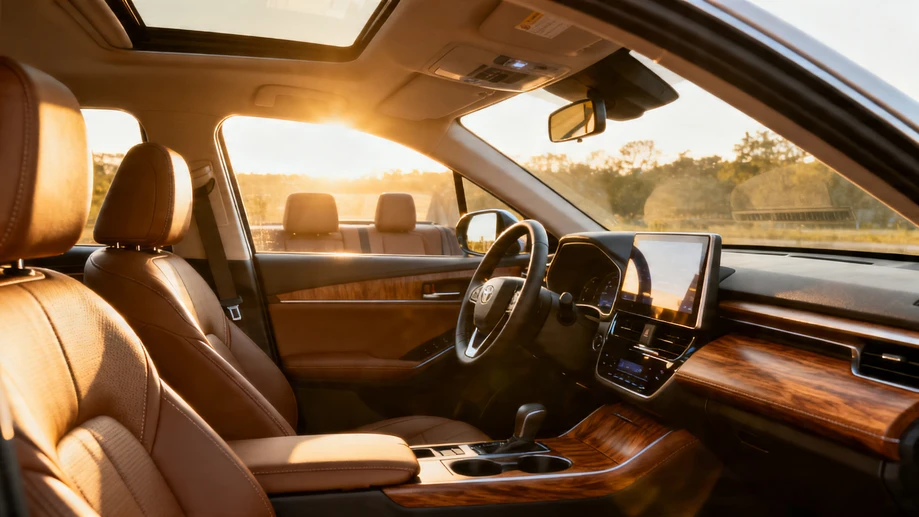
We spend nearly 4% of our lives inside cars – that's over 300 hours annually for the average driver. Yet few realize how deliberately engineered these mobile cocoons have become. Modern car interiors aren't accidents; they're meticulously crafted environments blending materials science, ergonomics, and human psychology. From the satisfying thud of a luxury door closing to the precise angle of an armrest, every element whispers secrets about our relationship with these rolling sanctuaries.
Material alchemy transforms mundane plastics into sensory experiences. Volkswagen's Beetle famously used cork insulation in the 1950s for its sound-deadening properties, while today's luxury brands embed actual marble dust into dashboard polymers. Automotive textiles undergo fire resistance testing equivalent to spacecraft materials, with some Mercedes-Benz seat fabrics enduring 1,200°C flames without melting. The familiar "new car smell"? A carefully calibrated cocktail of over 50 volatile organic compounds released from adhesives, plastics, and leather treatments – so potent that scientists can recreate it synthetically.
Ergonomics operate at military precision levels. BMW employs motion-capture technology from Hollywood studios, tracking drivers' micro-movements to sculpt seats that reduce back pressure by 27%. The 8-degree tilt of a Honda Civic's touchscreen? Calculated to minimize glare while allowing drivers to maintain peripheral road awareness. Even cup holders represent battlefield-tested innovation: Ford's F-150 engineers famously test prototypes with superheated coffee and aggressively shaken sodas to prevent spill disasters.
The psychology of color manipulates moods without conscious awareness. Porsche's vibrant "Guards Red" interiors boost alertness during long drives, while Lexus's muted "Hashi" beige promotes calm in traffic. Hidden "acoustic signatures" matter too: Luxury sedans tune door latches to produce reassuring bass tones, while economy cars engineer higher-pitched sounds perceived as cheaper. Touch-point choreography creates emotional bonds – Audi designers spend weeks adjusting knob resistance until the click feels "confident but not arrogant."
Our driving behaviors reshape interiors in surprising ways. University of Michigan researchers found driver's seat bolsters compress 40% more than passenger seats after five years, revealing our unconscious bracing during maneuvers. Steering wheels develop asymmetric wear patterns from our distinct turning preferences, while GPS data shows we instinctively position seats 2cm farther back during stressful commutes. These personalized imprints transform mass-produced spaces into individual nests, explaining why rental cars often feel unnaturally sterile.
As urban populations grow, car interiors evolve into multifunctional living spaces. Tesla owners report using "Camp Mode" for midday naps more than actual camping, while minivan designers now include vacuum cleaners and snack trays rivaling home kitchens. The modern commute's hidden triumph? Turning metal cages into intimate sanctuaries – proving that sometimes, the most important room in the house has four wheels and an engine.