
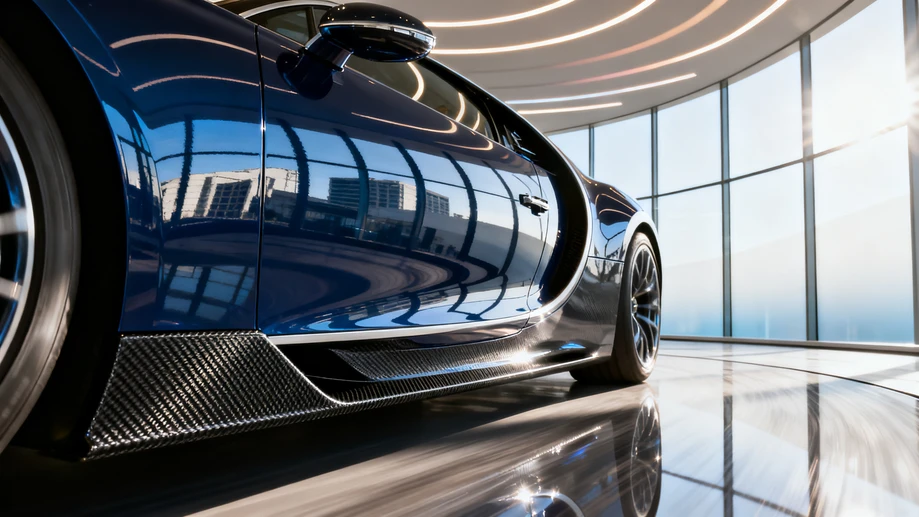
The Astonishing Alchemy Behind Luxury Car Paint and Designs!
How a Few Microns of Magic and Sculpted Steel Define Automotive Desire
When a Lamborghini streaks past in a blaze of molten bronze, it’s not just a car – it’s a rolling lightning bolt of physics and chemistry. Luxury automakers treat paint like medieval alchemists, blending crushed gemstones, metallic flakes, and light-bending polymers into liquid sorcery. A single Mercedes-Maybach hood might wear seven translucent layers, each thinner than a human hair yet glowing like Caribbean waters. This isn’t mere color; it’s engineered emotion. Pearlescent finishes borrow from seashell science, scattering light like prisms, while "chameleon" pigments shift from emerald to anthracite with a turn of your wrist. The magic happens in dust-free "clean rooms" where technicians spray in climate-controlled perfection – because even a stray eyelash could ruin a $20,000 paint job.
Consider the curve of a Ferrari's fender: that sensuous arc isn’t accidental sculpture but wind-tunnel poetry. Designers claw back millimeters like gold, shaping sheet metal to cheat air resistance while making pedestrians whip out their cameras. Porsche’s iconic roofline? Born from tracing a bridge’s suspension cable. Modern supercars hide function inside beauty: those Lamborghini hexagons aren’t just aggressive jewelry – they channel cooling breezes to roaring engines. And when Rolls-Royce crafts a Pantheon grille, they polish each stainless-steel upright for five hours until it mirrors constellations. This is why supercar silhouettes are instantly recognizable in rearview mirrors – every contour is a battle cry against boring.
Ever wondered why Bugatti’s blue looks deeper than the Mariana Trench? Their signature "French Racing Blue" contains microscopic ceramic crystals that reflect light twice, creating illusory depth. Meanwhile, Aston Martin’s "Q by Aston Martin" division offers paints blended with actual diamond dust – a glittering topcoat harder than conventional clear coats. For the ultimate flex, McLaren’s MSO lab concocts one-off colors using your bespoke inspiration: a client’s sunset photo or childhood koi pond became custom hues requiring 300 test sprays. The thickness? A precisely calibrated 120 microns – thinner than two stacked credit cards yet armored against stone chips with nano-ceramic fortresses.
Maintaining this mobile art demands monastic devotion. Forget garden hoses – owners deploy pH-neutral soaps and deionized water to prevent mineral spotting. Garages morph into sanctuaries with 60% humidity control because sunlight can fade million-dollar paint. Ceramic coatings now replace wax, creating liquid-repelling force fields that make raindrops dance like mercury. When a rock chip mars a Pagani’s carbon fiber, factories dispatch "flying doctors" with spectrometers to remix paint on-site. As one Bentley artisan confessed: "We don’t repair scratches. We perform resurrection."
So next time you freeze mid-sidewalk for a passing McLaren, remember: you’re witnessing science masquerading as seduction. That glow isn’t vanity – it’s nanotech theater. Those curves aren’t whimsy – they’re equations made steel. In a world of beige commuter boxes, luxury cars remain our last rolling masterpieces, whispering alchemical secrets one micron at a time.