
The Symphony Beneath Your Fingertips
Unraveling the Hidden Engineering in Everyday Car Interiors
Slide into any modern car and you're enveloped by a meticulously crafted environment that transforms mere transportation into a sensory experience. That new-car smell? It's not magic – it's volatile organic compounds from carefully selected materials like leather, plastics, and adhesives, deliberately engineered to evoke feelings of luxury and freshness. Your fingertips trace dashboard contours shaped by wind tunnel testing, while seat fabrics conceal microscopic tension sensors that maintain perfect weave integrity after thousands of entry-exit cycles. This invisible symphony of design surrounds drivers daily, yet few realize how every stitch and surface tells a story of human ingenuity.
Material scientists perform daily alchemy in plain sight. Modern seat upholstery might look like ordinary fabric, but it's likely embedded with phase-change materials – microscopic capsules that absorb heat when you sit and release it as you move. Headliners above your head contain recycled plastic bottles spun into sound-absorbing fibers, while "wood" accents are actually laser-etched recycled polymers mimicking grain patterns with atomic precision. Even humble cup holders deploy physics marvels: thermochromic coatings that change color with temperature, and silicone inserts engineered to dampen vibrations at specific resonant frequencies to prevent coffee spills.
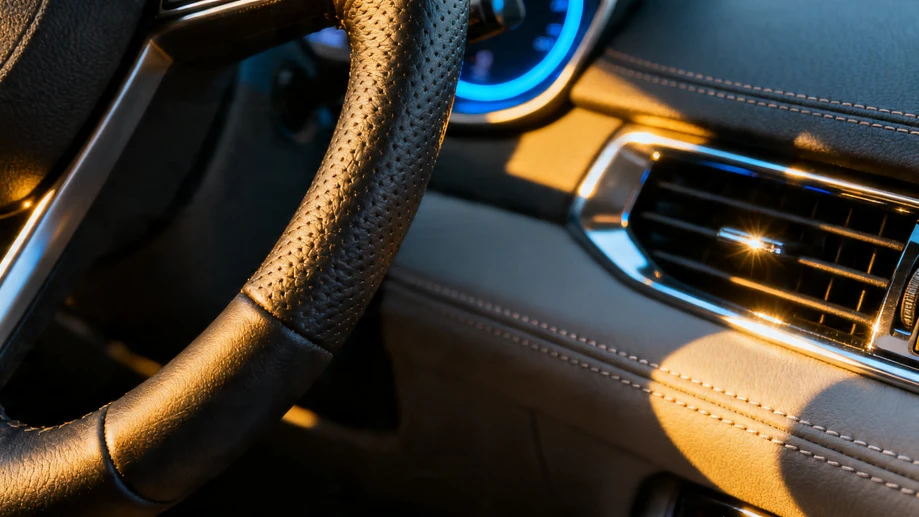
The ergonomic ballet begins before you even turn the key. Seat bolsters aren't just padding – they're pressure-mapped sculptures contoured to support 206 bones during 30-minute commutes and 8-hour road trips alike. Steering wheel rims contain hidden steel cores that collapse predictably during impacts, wrapped in foams with precisely calibrated density gradients. Climate control vents employ aerospace-derived laminar flow technology, silently directing air through microscopic channels to avoid face-blasting while maintaining perfect cabin temperature distribution. These unseen calculations transform physics into comfort.
Modern dashboards host a tactile orchestra. Knobs feature precisely calibrated detent resistance (typically 15-25 newton centimeters) to deliver satisfying clicks, while touchscreens use haptic feedback that mimics physical buttons through precisely timed micro-vibrations. Even the humble glovebox latch conceals engineering: over 100 prototype iterations ensure it opens with a muted thunk rather than a plastic rattle. Backlit controls use light-pipe technology to distribute LEDs evenly across symbols, consuming less power than a nightlight while remaining visible in any lighting condition.
Cleaning rituals reveal material secrets. Leather seats demand pH-balanced conditioners because alkaline cleaners break down collagen fibers, while microfiber fabrics require specific brushing techniques to lift dirt without damaging hydrophilic coatings. Dashboard plastics incorporate UV stabilizers that create sacrificial molecular layers, yellowing instead of cracking when exposed to sunlight. Professional detailers use infrared thermometers to identify hidden trouble spots – areas below 15°C indicate potential adhesive failure behind trim panels where condensation breeds mold.
This hidden world evolves through relentless iteration. A typical armrest undergoes 50,000 simulated elbow drops in durability testing, while seat fabrics endure automated "butt machines" replicating a decade of use in three weeks. The quietest cabins achieve their library-like hush through 37 distinct sound-absorption technologies, including foam-filled pillars and asymmetric tire tread patterns that cancel specific road frequencies. Next time you buckle up, remember: you're not just entering a vehicle, but a masterpiece of unseen human craftsmanship that transforms steel and fabric into a sanctuary on wheels.