
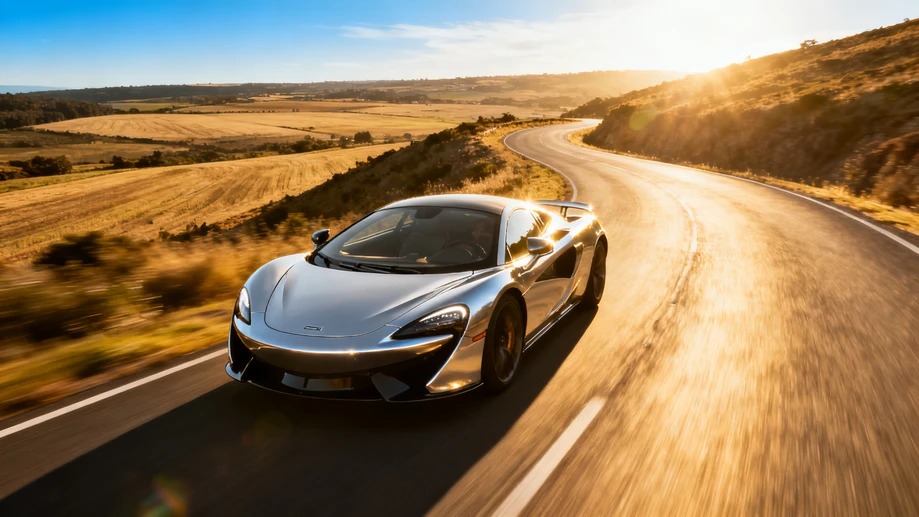
Feel the Redline's Roar!
Exploring the Wild World of Supercars with Mind-Blowing Facts and Everyday Thrills
Picture this: you're behind the wheel of a sleek, low-slung machine that rumbles to life with a symphony of horsepower. In an instant, you're catapulted from 0 to 60 mph faster than a blink, the wind whipping past as the asphalt blurs beneath you. This isn't science fiction—it's the everyday magic of supercars. These automotive marvels have captivated imaginations for decades, turning heads on city streets and open highways alike. Why do we adore them? It's simple: they embody raw power, precision engineering, and an undeniable flair that turns routine commutes into adrenaline-fueled adventures. Unlike standard cars, supercars like Ferrari and Lamborghini blend cutting-edge tech with artistic design, making every drive a statement. But beyond the flash, they're rooted in real-world innovation, born from racing tracks and refined for daily use.
Tracing back to the early 20th century, supercars evolved from humble beginnings into icons of speed. Think of the 1920s Bugatti Type 35, a trailblazer that dominated races with its lightweight frame—a far cry from today's beasts. Fast forward to the 1960s, when models like the Ford GT40 revolutionized motorsport, proving that high performance could trickle down to consumer vehicles. By the 1980s, innovations in materials like carbon fiber emerged, slashing weight while boosting strength. Today's legends, such as the McLaren P1, incorporate hybrid tech to marry electric efficiency with combustion power. Each era pushed boundaries, driven by fierce rivalries—like Ferrari versus Lamborghini—that sparked global fan bases. This evolution wasn't just about going faster; it mirrored society's embrace of mobility and freedom, turning niche hobbies into mainstream passions.
Under the hood, supercars pack jaw-dropping tech that makes them street-legal rockets. At their core, powerful V8 or V12 engines generate insane horsepower—often over 700—through turbocharging and direct injection. This isn't magic; it's physics optimized for acceleration. Aerodynamics play a crucial role: think of those swooping curves and rear wings that slice through air, reducing drag and increasing downforce for better grip. Equally impressive are the braking systems, with carbon-ceramic discs that withstand intense heat from repeated high-speed stops. Transmission systems like dual-clutch gearboxes shift gears in milliseconds, ensuring seamless power delivery. These features aren't just for show; they stem from real-world racing, where split-second decisions decide wins. Yet, they're accessible to everyday drivers, with safety systems like traction control preventing spins on wet roads.
Supercars aren't all serious business—they're full of quirky tales that add sparkle to their mystique. For starters, did you know James Bond's Aston Martin DB5 became so iconic after its film debut that it sparked a collector frenzy? Or consider the Bugatti Veyron, which guzzles fuel so fast it needs its own cooling system for brakes. Then there's the bizarre story of a Lamborghini Countach: owners often joke about its "door dance" routine, where they contort to exit the low-slung cabin without embarrassment. Real-life anecdotes abound, like drivers who use McLarens for grocery runs, drawing stares in parking lots. Fun facts include the "million-dollar club"—cars like the Pagani Huayra that command astronomical prices, yet depreciate slower than average sedans. These quirks highlight how supercars blend utility and whimsy, proving that even exotic machines fit into humdrum routines.
Beyond the garage, supercars influence everyday life in surprising ways. Their tech trickles down to regular vehicles, improving safety and efficiency—think advanced braking or hybrid systems. Culturally, they star in ads and media, symbolizing success and adventure, which inspires enthusiasts to dream big. On a personal level, clubs like Porsche's driving experiences offer workshops where novices can test skills on closed courses, building confidence for real roads. Of course, challenges exist: high maintenance costs or speed regulations can limit ownership to the fortunate few. But the impact is global, with communities rallying around events like Monaco's Grand Prix, where fans gather to witness these beasts in action. It's a testament to their enduring appeal: they fuel passions, spark innovation, and remind us that life should be lived with a bit of throttle.