
Ever Wonder Why Supercar Paint Costs More Than Your First Car?
Decoding the science and sorcery behind automotive masterpieces that turn streets into catwalks
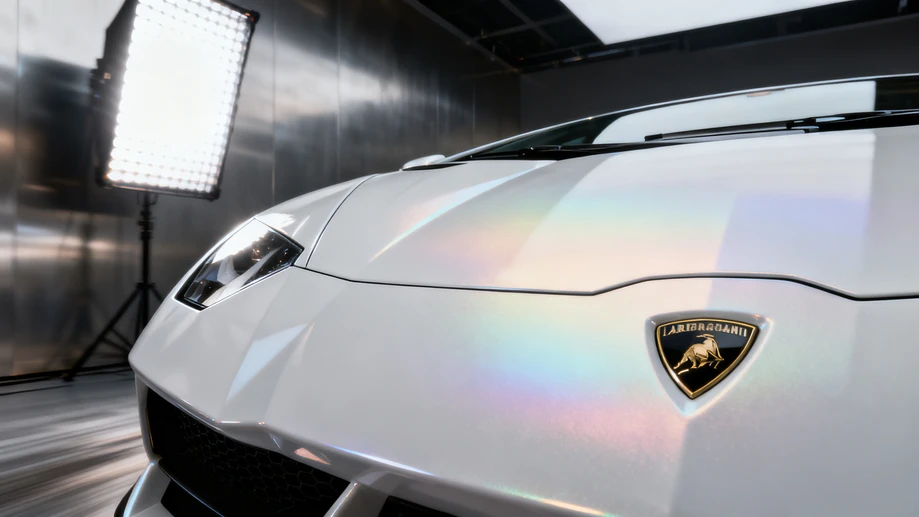
Picture this: a Lamborghini Huracán gliding through city lights, its metallic bronze skin shifting hues like liquid sunset. That jaw-dropping spectacle isn't magic - it's physics and chemistry performing an intricate dance. Modern supercar finishes contain up to 15 microscopic layers, each playing a specific role. The base coat provides color saturation, mid-layers create depth with pearlescent flakes, while the final clear coat acts as an invisible shield. These crystalline sandwiches measure just 0.1mm thick - thinner than a credit card - yet withstand 180mph wind blasts and UV radiation that would fade ordinary paint in months.
Automotive designers wage war against air resistance using shapes that look sculpted by nature. Consider the Ferrari SF90 Stradale's nostrils: those feline slashes aren't just dramatic styling - they channel turbulence away from wheel arches at high speeds. Porsche's engineers spend months refining rear diffusers that look like abstract art but generate critical downforce. When McLaren tests prototypes in wind tunnels, they map airflow with fluorescent smoke trails, chasing fractions of aerodynamic efficiency. The resulting curves emerge from thousands of computational simulations, proving that beauty in supercars is literally skin-deep physics.
Behind every iconic color lies obsessive pigment science. Bugatti's "Jet Orange" contains actual diamond dust for scintillating refraction. BMW's Frozen Grey matte finishes achieve their velvet texture through nano-ceramic particles that scatter light differently than glossy paints. Special effect pigments like mica flakes and titanium dioxide crystals create chameleon finishes that shift between three colors depending on viewing angle. These bespoke recipes cost up to $20,000 per gallon - not because they're gold-plated (though some literally contain gold) but because they're engineered like spacecraft heat shields.
Maintaining these mobile artworks requires near-religious dedication. Owners learn that automatic car washes are forbidden lands where swirling scratches multiply like tribbles. Hand-washing with pH-neutral solutions becomes a meditative ritual, followed by ceramic coating applications requiring dust-free environments. Even microfiber towels get scrutinized under magnification - standard terry cloth can leave microscopic scratches on soft clear coats. The payoff? Decades later, vintage Ferraris still glow with their original Rosso Corsa red because owners treated their paint like museum artifacts.
Next time a Pagani Zonda winks at you under neon lights, remember its skin represents a decade of innovation. That iridescent shimmer? Aluminum flakes precisely aligned during electrostatic painting. Those razor-sharp body lines? CNC-milled from aerospace aluminum blocks. What looks like automotive vanity is actually a triumph of materials science where pigments flex light waves and aerodynamics sculpts steel into poetry. These rolling galleries remind us that in the intersection of art and engineering, humanity creates moving masterpieces.