
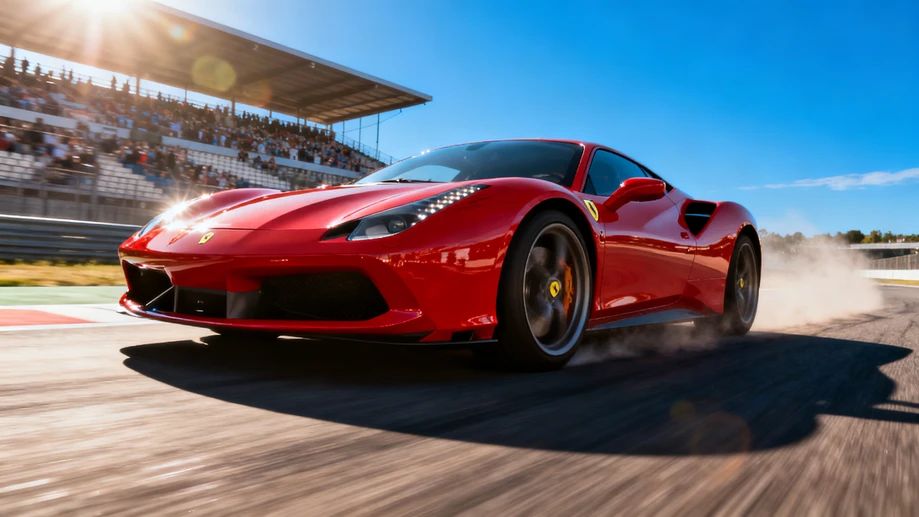
5 Mind-Blowing Facts About Supercars That Will Leave You Speechless
Uncover the jaw-dropping secrets behind these high-speed marvels that redefine everyday driving excitement.
Supercars aren't just vehicles; they're rolling masterpieces that ignite passion and curiosity in every petrolhead. Imagine cruising down a coastal highway, the engine roaring like a symphony, as heads turn in awe. These machines blend art and engineering to create an experience so visceral, it transforms mundane commutes into thrilling adventures. From the sleek curves of a Ferrari to the raw power of a Lamborghini, supercars represent the pinnacle of automotive innovation, pushing boundaries in speed, design, and technology. They're not just for the wealthy elite—they inspire dreams and fuel conversations at local car meets, proving that even in our daily lives, a glimpse of one can spark joy and wonder. This article dives into the fascinating world of supercars, revealing surprising truths that make them more than mere status symbols; they're testaments to human ingenuity.
Delving into history, the first supercars emerged in the mid-20th century, born from a quest for speed and style that reshaped the automotive landscape. Take the iconic 1962 Ferrari 250 GTO, which set the stage with its lightweight body and powerful V12 engine, dominating racetracks and becoming a collector's gem today. Back then, engineers focused on aerodynamics and weight reduction, using materials like aluminum to shave off pounds—innovations that trickled down to everyday cars, improving fuel efficiency and safety. Fast forward to the 1980s, when models like the Porsche 911 Turbo brought turbocharging to the mainstream, making high performance accessible. These historical leaps weren't just about racing glory; they influenced how we drive now, from the responsive handling in family sedans to the thrill of accelerating on an open road. It's a reminder that supercars' legacy lives on in every turn of the wheel.
Under the hood, supercars boast engineering feats that defy expectations, turning complex science into pure adrenaline. For instance, modern engines like the McLaren 720S's twin-turbo V8 produce over 700 horsepower, allowing 0-60 mph sprints in under 3 seconds—faster than most roller coasters. What's astonishing is how this power is harnessed: advanced systems such as active aerodynamics adjust wings in real-time for optimal downforce, ensuring stability at high speeds without sacrificing comfort. Even the materials are revolutionary; carbon fiber monocoques reduce weight while enhancing safety, a feature now seen in premium SUVs. But it's not all about brute force; hybrid tech in cars like the Ferrari SF90 Stradale combines electric motors with combustion engines for silent, efficient city driving. This blend of innovation means supercars aren't just track beasts; they're practical enough for weekend getaways, proving that cutting-edge tech can coexist with daily usability.
Beyond the specs, supercars hide quirky facts that add a layer of fun to their mystique. Did you know that the Bugatti Chiron's tires cost over $40,000 per set and need replacing every few thousand miles due to extreme wear? Or that the Koenigsegg Jesko can hit 300 mph, but its top speed is often limited by road laws—making it a rare sight at full throttle. Another gem: many supercars use "launch control" systems, where a simple button press optimizes acceleration for perfect takeoffs, a feature born from racing but now a party trick for owners. These machines also hold records like the Hennessey Venom F5's quest to break 300 mph, capturing global attention and sparking debates at coffee shops. Even in maintenance, quirks abound; Ferrari owners might share stories of specialized technicians who fine-tune engines with surgical precision. These tidbits transform supercars from cold metal into relatable characters, full of surprises that fuel casual chats and YouTube videos.
In everyday life, supercars impact more than just drives; they weave into culture, economics, and personal stories, making them surprisingly accessible. Think of car shows in local parks, where families gather to admire a parked Lamborghini, or how social media turns a spotting into viral content. Financially, they're not just toys—supercar appreciation often beats stocks, with rare models like the McLaren F1 selling for millions. Driving one daily isn't impractical; modern designs include luggage space and comfortable seats, easing commutes. Yet, there's a human side: owners recount the thrill of their first test drive, or how a supercar community fosters friendships over shared passions. Even environmental concerns are addressed; electric supercars like the Rimac Nevera show that sustainability can be thrilling. This real-world integration proves that these machines aren't distant fantasies; they're part of our fabric, inspiring innovations in regular cars and reminding us that excitement is just around the corner.
As we wrap up, supercars stand as symbols of progress and joy, constantly evolving yet grounded in reality. They challenge us to dream bigger, whether through eco-friendly advances or democratizing tech via apps that simulate their sounds. The future promises even more wonders, like AI-assisted driving modes that enhance safety without dulling the thrill. But at heart, supercars teach a simple lesson: innovation should be fun and tangible, not reserved for sci-fi. So next time you spot one on the street, appreciate the artistry—it's a daily dose of inspiration. After all, in a world of routine, these speed demons remind us that life is meant to be lived at full throttle.